



Tool theft has become one of the most persistent problems facing UK trades. Incidents reported to police have risen steadily over the past decade, with thousands of vans broken into every year and millions of pounds’ worth of equipment lost. Beyond the financial cost, the theft of tools often brings projects to a halt and damages livelihoods.
The growing scale of the problem has pushed Parliament to consider targeted legislation. The Theft of Tools of Trade Bill is designed to recognise the unique impact of stolen tools, increase penalties for offenders, and encourage better prevention and reporting.
Key Takeaways
- Tool theft continues to affect trades across the UK, with thousands of incidents reported each year.
- The Theft of Tools of Trade Bill aims to change sentencing guidelines so courts treat these offences as causing “significant additional harm.”
- The proposal recognises the real impact of stolen tools on livelihoods and small businesses.
- It was introduced as a Private Member’s Bill in late 2024, and is currently in its second reading as of 31st October 2025.
- Current theft laws still apply. The Bill focuses on how harm and losses are assessed during sentencing rather than creating a new offence.
Why This Bill Exists
Tool theft remains widespread in the UK trades sector. Figures from Direct Line show more than 25,000 thefts reported to police in 2024, estimated at £40 million in stolen equipment. Around half of those incidents involved tools taken from vehicles. While that number marked an 18% fall compared with 2023, the true scale is likely higher due to under-reporting.
Tool theft creates disruption that goes far beyond the value of what is taken. When a set of tools disappears, work often stops until replacements arrive. Projects run late, costs rise and insurance only covers part of the loss. For many small businesses, a single theft can put pressure on cash flow and damage client relationships. This wider impact has driven calls for the law to treat tool theft as a distinct problem.
The Theft of Tools of Trade Bill is Parliament’s response to that pressure. It follows years of campaigning from industry groups and MPs who argue that the existing law treats stolen tools like any other property, without acknowledging the wider harm caused when essential trade equipment is taken.
What the Bill Says
The Theft of Tools of Trade Bill aims to change how courts assess the seriousness of tool theft. It does not create a new criminal offence but instead amends the Coroners and Justice Act 2009, directing the Sentencing Council to recognise these thefts as causing “significant additional harm.”
In practical terms, this means sentencing decisions must take into account the broader damage a theft can cause. That includes:
- The full replacement cost of the tools
- Any vehicle damage caused during the theft
- Business interruption or missed work
- Loss of earnings and client confidence
The Bill defines a ‘tool of trade’ as any item “reasonably required for a person’s profession, trade or business.” This captures:
- Hand and power tools
- Diagnostic and surveying equipment
- Plant attachments and site machinery
- Specialist devices used in professional work
By recognising these items separately, the Bill acknowledges that the impact of stealing trade tools reaches further than the simple loss of property value. It frames the offence in terms of livelihood, not possession.
What Would Change if the Bill Passes
The Bill would not introduce a new criminal offence or increase the maximum sentence for theft. Instead, it would alter how courts assess harm during sentencing. When the theft involves tools of trade, judges would be required to consider the wider losses that follow the crime.
At present, sentencing for theft focuses mainly on the financial value of what was stolen. Under the proposed change, courts would also weigh up:
- Loss of income while tools are replaced
- The cost of hiring temporary equipment
- Damage to vehicles or storage units during the theft
- The disruption caused to ongoing projects
These proposed changes will ask the courts to view tool theft as an offence that harms a person’s capacity to work, not just their possessions. The broader impact that tool theft causes needs to be accounted for, something which the Bill hopes to achieve by making the penalties proportionate to the crime.
Where the Theft of Tools Trade Bill is Now
The Theft of Tools of Trade Bill is still at an early stage in Parliament. It was introduced to the Commons in December 2024 and is currently in its second reading stage as of 31st October 2025. As a Private Member’s Bill, its progress will depend on how much support it gathers from the government and other MPs.
Few Private Members’ Bills make it all the way into law, but they often shape future policy. This proposal has already gained attention across parties, reflecting how common tool theft has become and how strongly it affects people working in the trades.
If the Bill progresses, it would move through the usual stages in both Houses before receiving Royal Assent. For now, it serves as a clear signal that the government is under pressure to take tool theft more seriously, whether through this Bill or through future amendments to sentencing guidelines.
How This Fits With Existing Laws
Tool theft is already covered under the Theft Act 1968, which sets a maximum sentence of seven years for general theft offences. In most cases, sentences are decided based on the value of the items taken and the circumstances of the crime.
The new Bill would not replace that framework. Instead, it would work within it by changing how harm is measured during sentencing. Judges would still refer to the Sentencing Council’s theft guidelines, but those guidelines would be updated to include theft of tools of trade as an example of “significant additional harm.”
Several other offences can apply alongside theft, depending on the case. These include:
- Handling stolen goods carries a maximum sentence of 14 years
- Burglary, when entry is forced into a van, workshop or site
- Going equipped for theft, covering tools or devices used to commit the crime
The Bill also sits alongside the Equipment Theft (Prevention) Act 2023, which gives the government powers to require forensic marking, immobilisers and sales records for certain types of machinery. Together, these measures show a broader push to deter organised theft of tools and equipment.
Practical Implications for Trades and Site Managers
If the Bill becomes law, its impact would mainly be felt at the point of sentencing, not day-to-day operations. But the principles behind it underline how important it is to document and protect work equipment properly.
Courts would need clear evidence of loss beyond the cost of the stolen tools themselves. That means good record-keeping will matter even more. Simple steps make a difference:
- Keep an up-to-date inventory of all tools and serial numbers
- Store purchase receipts and photographs in one accessible place
- Record who uses which tools and where they are kept
- Make sure insurance details are current and cover the full replacement value
Having this information to hand helps police and insurers build a full picture of the loss. It also supports stronger victim statements if a case goes to court.
Beyond paperwork, the Bill reinforces the idea that prevention and accountability need to go hand in hand. Marking, registering and tracking tools not only improve recovery chances but also help prove ownership when stolen equipment is found.
Reporting a Theft and Documenting Losses
Reporting a theft quickly gives the best chance of recovering what has been taken. Police data also depends on accurate reports, which help show the true scale of tool theft across the UK.
If tools are stolen, the steps are straightforward:
- Report the theft to your local police. Use the force’s online reporting tool or call 101 for non-emergencies. If a crime is in progress, always call 999.
- Get a crime reference number. Insurers will need this to process any claim.
- List every item stolen, including brand names, serial numbers and photographs if available.
- Contact your insurer as soon as possible and provide the police reference and full inventory.
- Update registration databases, such as Immobilise or Toolwatch, so stolen items can be flagged if recovered later.
Alongside these steps, police forces encourage people to register and mark tools before theft happens. Forensic marking, engraving or QR tagging creates a visible deterrent and helps prove ownership during investigations.
Good reporting and documentation also strengthen how theft is handled by insurers, particularly if the Theft of Tools of Trade Bill comes into effect and courts begin placing more weight on the full scale of losses.
Preventing Tool Theft and Protecting Your Business
Legislation alone won’t solve tool theft. The Bill is a sign that the issue is being taken seriously, but the most effective protection still comes from secure storage and traceability.
Every year, police and insurers repeat the same pattern in recovered tool cases: items that are clearly marked, registered or locked in approved storage are far more likely to be returned and accepted in claims.
Simple measures still make the biggest difference:
- Lock away tools in reinforced storage, both on-site and in vehicles
- Anchor vaults or cabinets, where possible, to prevent removal
- Mark and register every tool with recognised databases such as Immobilise
- Install lighting and cameras around the site storage areas
- Remove valuable tools overnight when working from vans or temporary sites
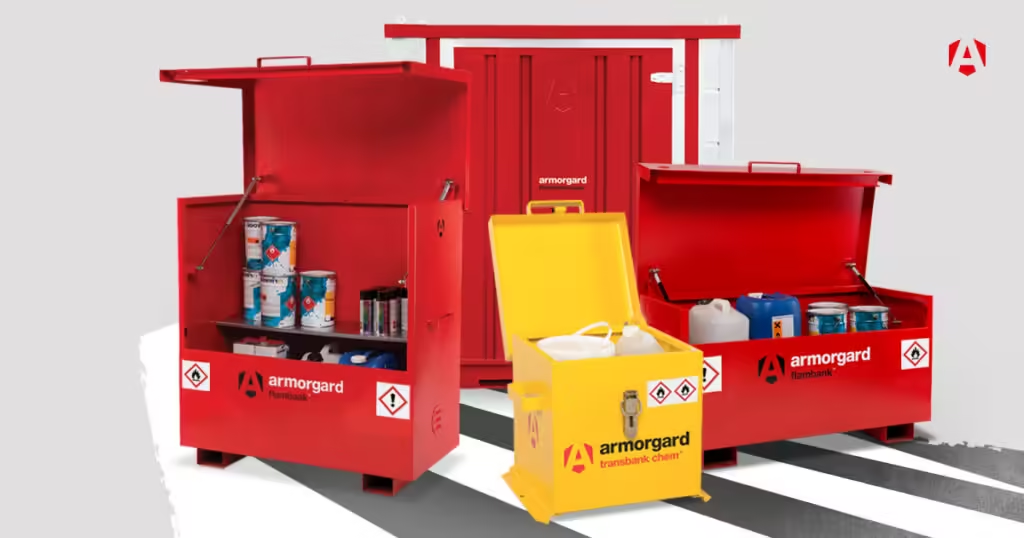
At Armorgard, this principle of layered protection sits behind every product design. Secure vaults, COSHH-compliant storage and tool tracking options all help reduce the risk long before police or courts need to get involved.