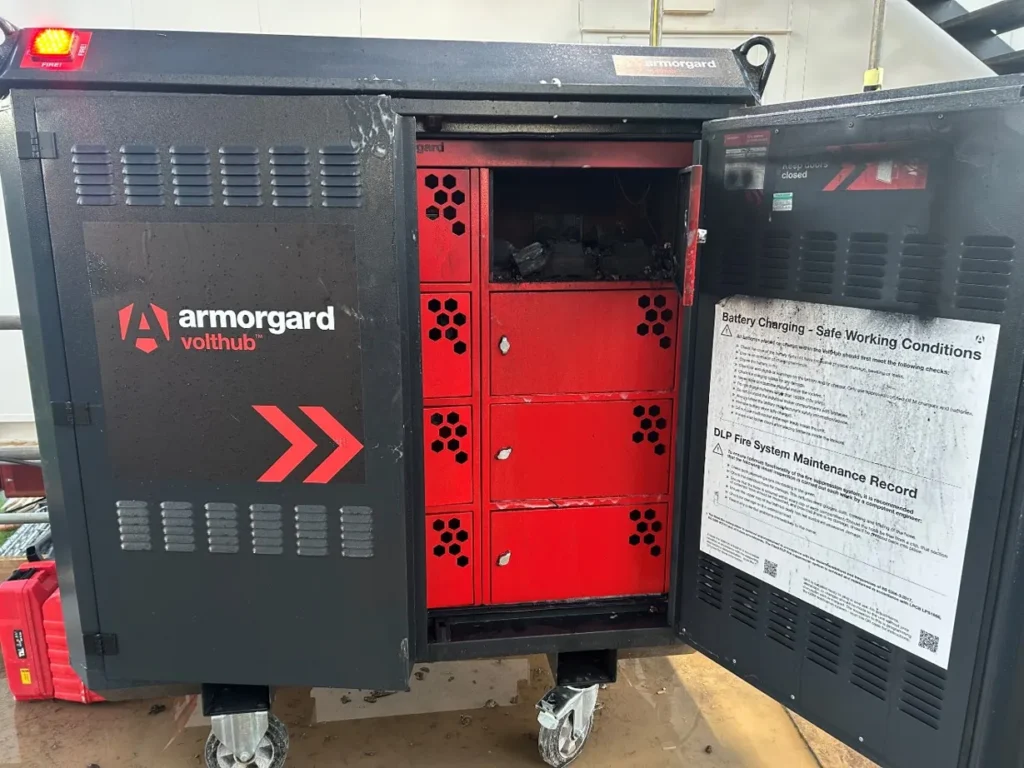


There is a version of product development that starts with a concept and ends with a specification sheet. And then there is the version that starts with a fire.
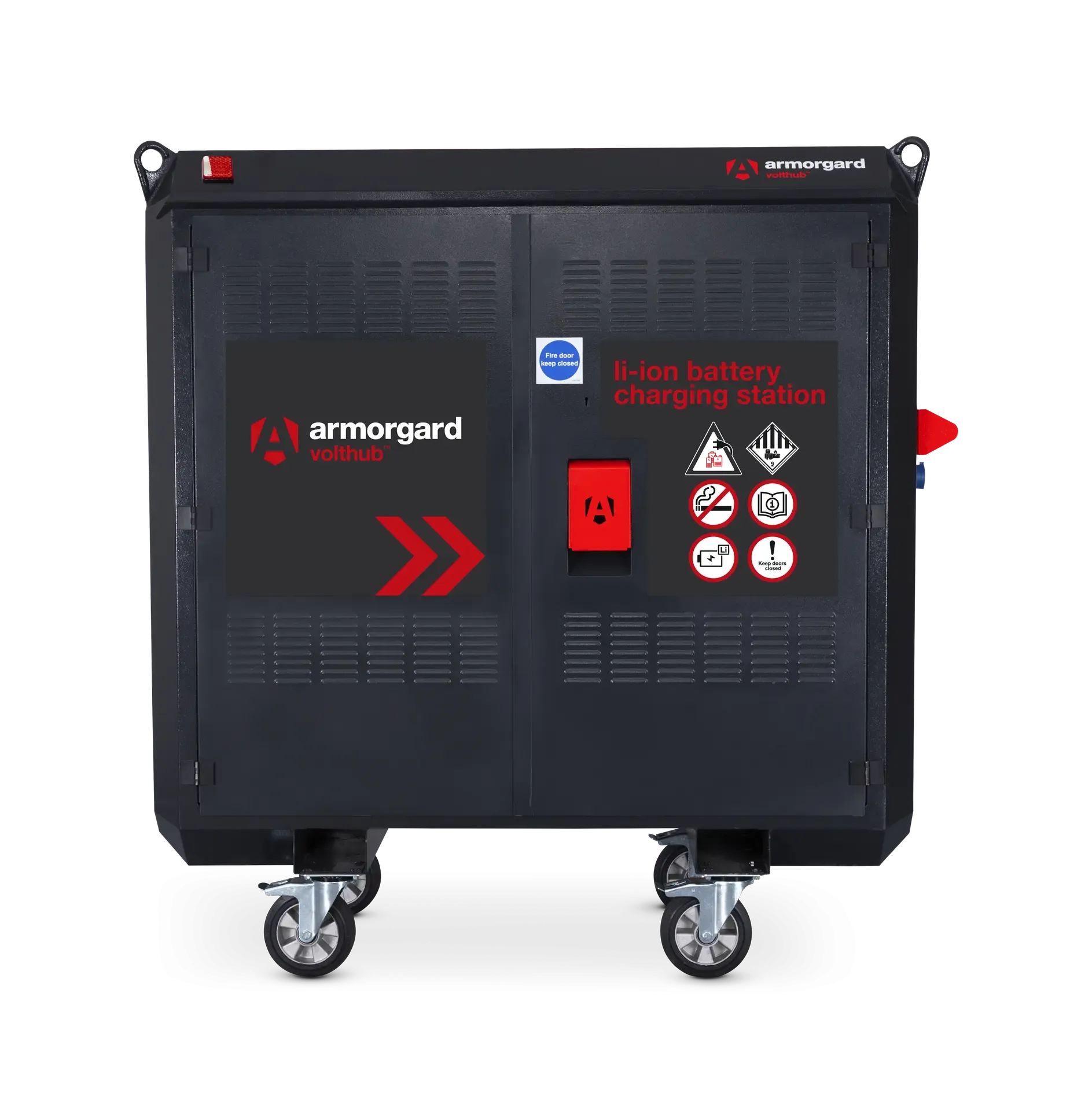
Armorgard’s approach to lithium-ion battery safety certification is built on real-world experience, developed in partnership with the London Fire Brigade and the Royal Navy to ensure our battery charging and storage solutions are not just a marketing footnote. When your development partners are institutions that deal with battery fires professionally, that live and work with the consequences of thermal runaway, the resulting product looks fundamentally different from one designed by an engineering team working from published test data alone.
So what do those institutions actually know? And why does it matter for a facilities manager?
Why Standard Charging Solutions Fail in Real-World Fire Scenarios
Most charging infrastructure on the market was designed for a world where lithium-ion batteries were smaller, less energy-dense, and less ubiquitous than they are today. The out of date safety assumptions baked into these products (the materials used, the containment specifications, the electrical protection standards) were set in a different environment.
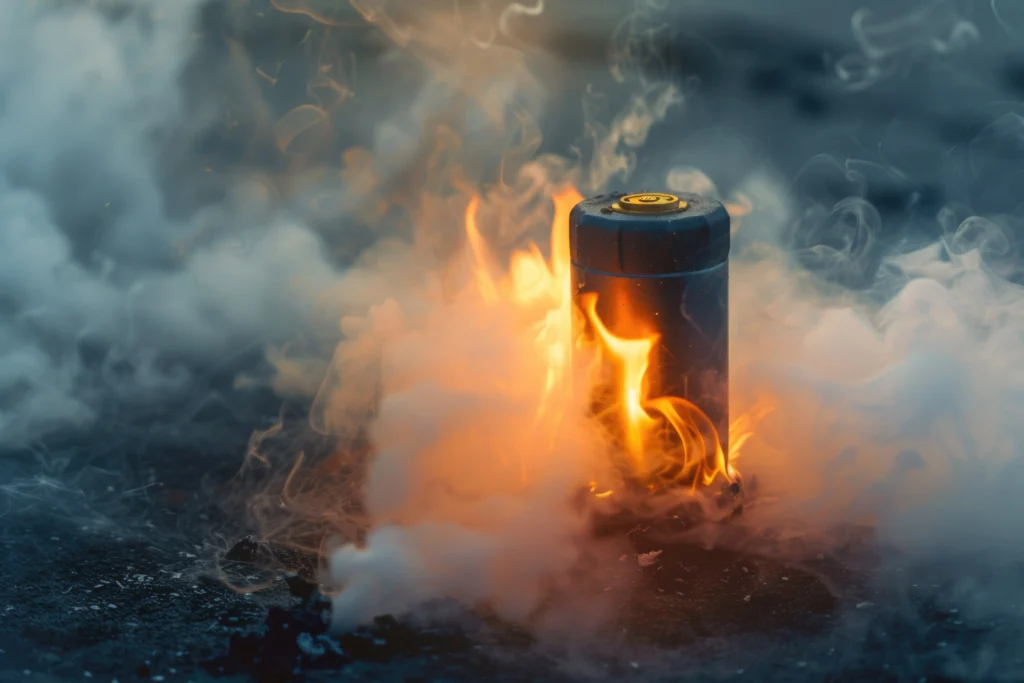
The London Fire Brigade has seen firsthand how those assumptions break down. A battery in thermal runaway does not behave like a conventional fire. It can reignite after appearing extinguished, burn at extreme temperatures, and release toxic gases, rendering standard fire containment measures – designed for paper, wood, or fuel-based fires – insufficient.
The Royal Navy operates in enclosed shipboard environments where fire containment is a matter of survival. Spaces are confined, evacuation routes are limited, and suppression options are constrained. If a battery storage or charging solution can meet Navy standards for enclosed-environment safety, it is by definition significantly more robust than what most commercial environments require. That is exactly the right baseline from which to build a product.
Real World Testing: Beyond Certifications
Real-world testing means deliberately inducing thermal runaway in the kind of batteries the products users are in contact with daily: the damaged, degraded, and improperly charged batteries that end up on real charging stations on real sites. It means testing containment under the conditions of an actual fire event, validating that the electrical protection systems work when they are needed, and confirming performance under the conditions of genuine operational use. This distinction matters because there is a significant difference between a product that has passed the required certification tests and a product that has been genuinely stress-tested against the conditions it will face in service by regular users.
RCD Protection: The Electrical Safety Feature Your Charging Station Cannot Afford to Skip
A Residual Current Device monitors the flow of electrical current through a circuit and is a non-negotiable feature in any indoor charging station. When it detects a fault (a leakage to earth suggesting an electrical short or the beginning of an arc fault) it cuts the power in milliseconds. Milliseconds matter enormously when a lithium-ion battery is involved.
The absence of RCD protection in a charging setup removes the primary electrical safeguard between an early-stage fault and a full thermal runaway event. Batteries often spend hours on charge unattended, overnight, or over weekends. In those conditions, a fault that develops slowly can go undetected until it is too late. RCD protection is what catches it early.
In the absence of a dedicated certification standard for lithium-ion battery storage, the burden of due diligence falls squarely on the specifier. That makes the question of who developed a product, and how, more important than ever. Authority in this space is earned through track record, genuine partnerships, and the willingness to subject products to independent scrutiny, not a certificate on a datasheet. When the institutions that deal with the worst outcomes of lithium-ion fires are the same institutions helping to develop the safety systems protecting your site, you can be confident that the bar has been set at the right level.