


Picture a Monday morning. The warehouse floor hums into life, operatives pull tools off charge, and forklifts roll out of the bay. Everything looks normal. But in the corner, a lithium-ion battery that spent the weekend on an uncertified charger is running hotter than it should. Not dangerously hot (not yet), just a few degrees above where it ought to be.
That is how most lithium-ion fires start.
How Lithium-ion Battery Fires Happen
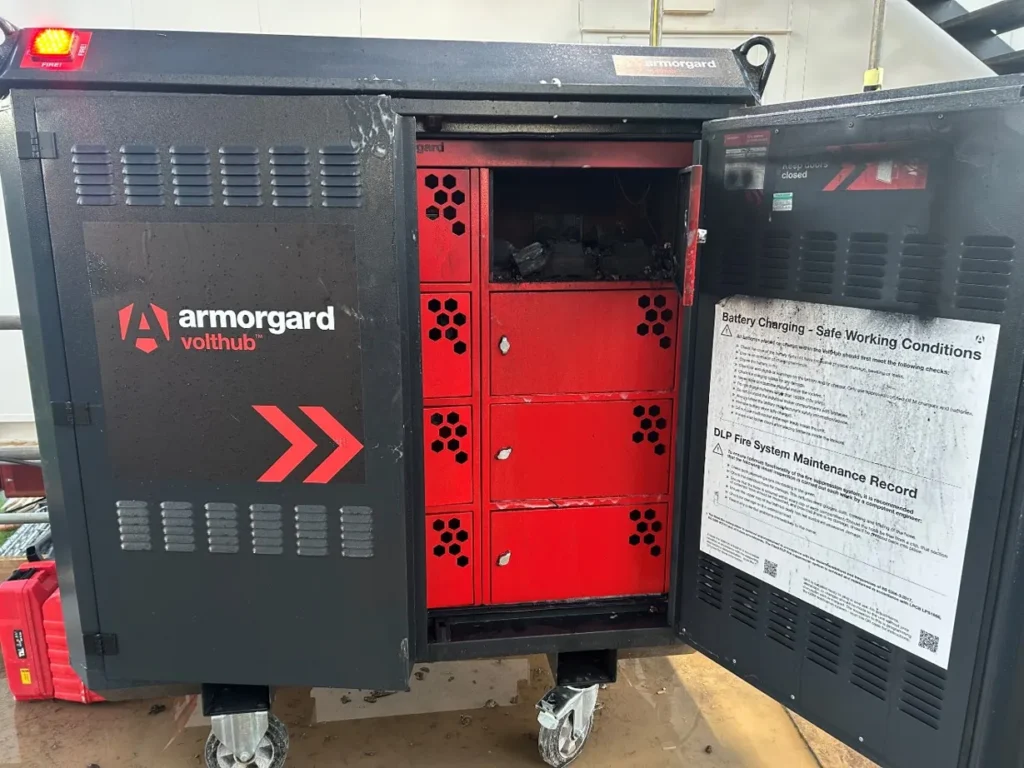
Thermal runaway, the chain reaction that turns a lithium-ion battery from a power source into a fire hazard, does not announce itself. It builds quietly, and when it goes, it goes fast. Fires of this kind reach temperatures that standard suppression systems struggle to contain, and they are notoriously difficult to extinguish once they have taken hold. The London Fire Brigade has seen it, with callouts to fires caused by lithium-ion batteries reaching 5,000 in 2024. And now increasingly, businesses across the UK are encountering it too, often completely unprepared.
The Numbers Do Not Lie
According to Aviva’s 2025 data:
- 54% of businesses in the UK have experienced a lithium-ion battery fire or related incident.
- 19% reported a device or battery sparking on site.
- 17% had experienced a battery smoking
These incidents are occurring in warehouses, offices, manufacturing plants and retail stockrooms – spaces just like yours. And when things do go wrong, the costs are steep! The average cost of a lithium battery fire claim in the UK sits at £50,000. Factor in operational downtime, regulatory scrutiny, potential legal liability, and the reputational damage that follows a serious incident, and the true cost climbs considerably further.
What UK Battery Charging Safety Regulations Require
The regulatory landscape around lithium-ion battery charging indoors has tightened significantly. Facilities managers and H&S officers must focus on:
- Containment and fire-resistant storage
- Adequate ventilation
- Proximity to escape routes
- Electrical safety of charging equipment
Residual Current Device (RCD) protection is a fundamental requirement that many off-the-shelf charging setups simply do not provide. RCDs detect electrical faults and cut power before they can cause a fire or electrocution, and they are the difference between a near-miss and a catastrophe. Yet a significant proportion of charging infrastructure currently deployed in UK workplaces does not include this protection as standard.
The Cost of Doing Nothing
There is a tendency to treat safety upgrades as discretionary, something that goes on the list, moves down the list, and eventually gets budgeted for next year. With lithium-ion charging, that logic does not hold.
A battery fire onsite triggers:
- Insurance claims
- Operational shutdowns
- HSE investigations
- Stock and equipment damage
- Significant time and resource to resume operations
- At worst, loss of life
Insurers increasingly scrutinise UK battery charging safety arrangements when assessing claims. Non-compliant setups may limit coverage.
The Solution: Safe Indoor Charging for Lithium-ion Batteries
The good news: the gap between current practices and full compliance is not as large – or as expensive – as it seems. The right solution is:
- Compact and plug-and-play
- Built and tested to meet L-classification standards
- Designed specifically for operational environments
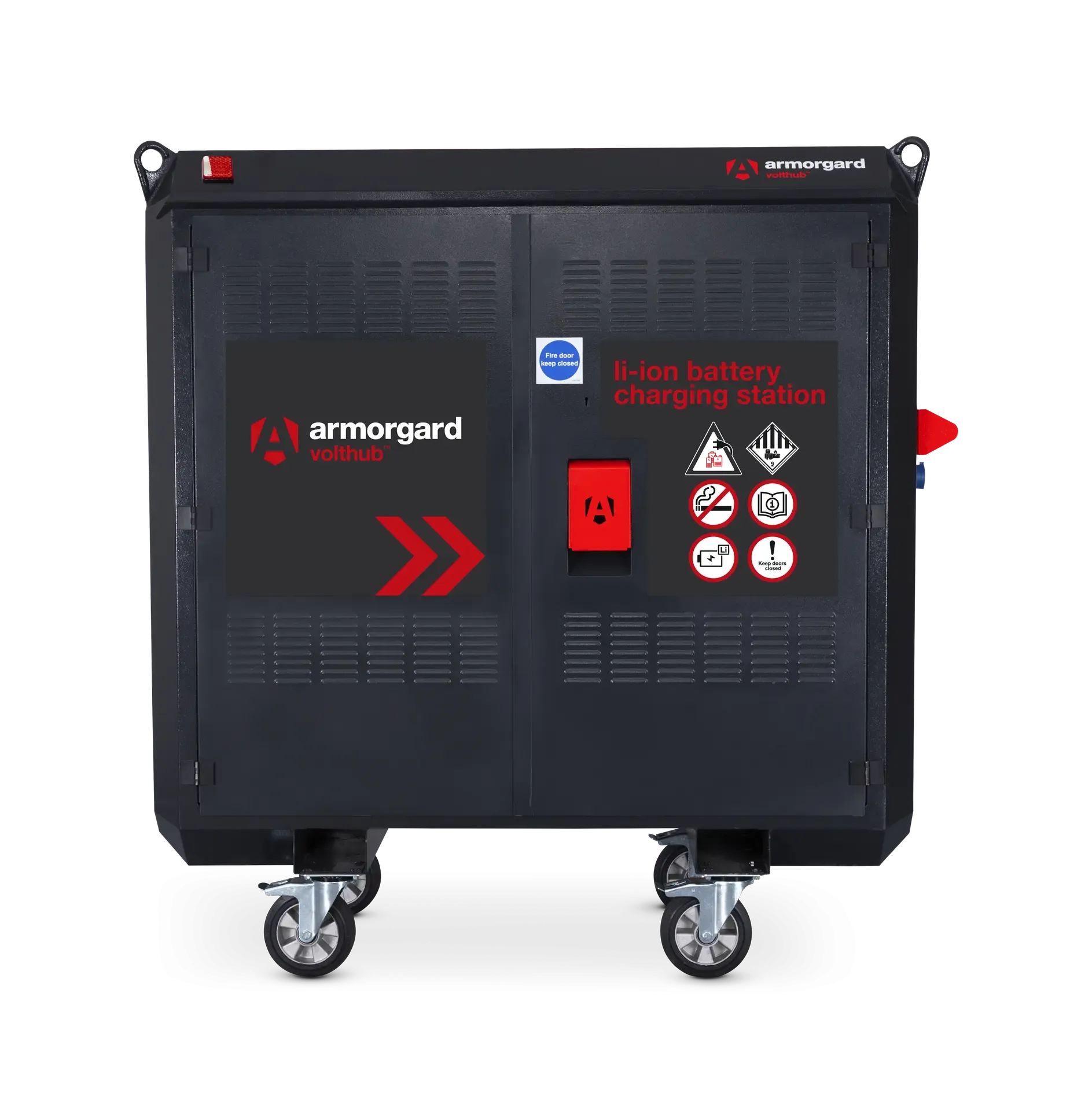
This is exactly what the Qpod delivers. Minimise indoor lithium-ion fire risks while keeping your workspace compliant with the UK battery charging safety regulations.