


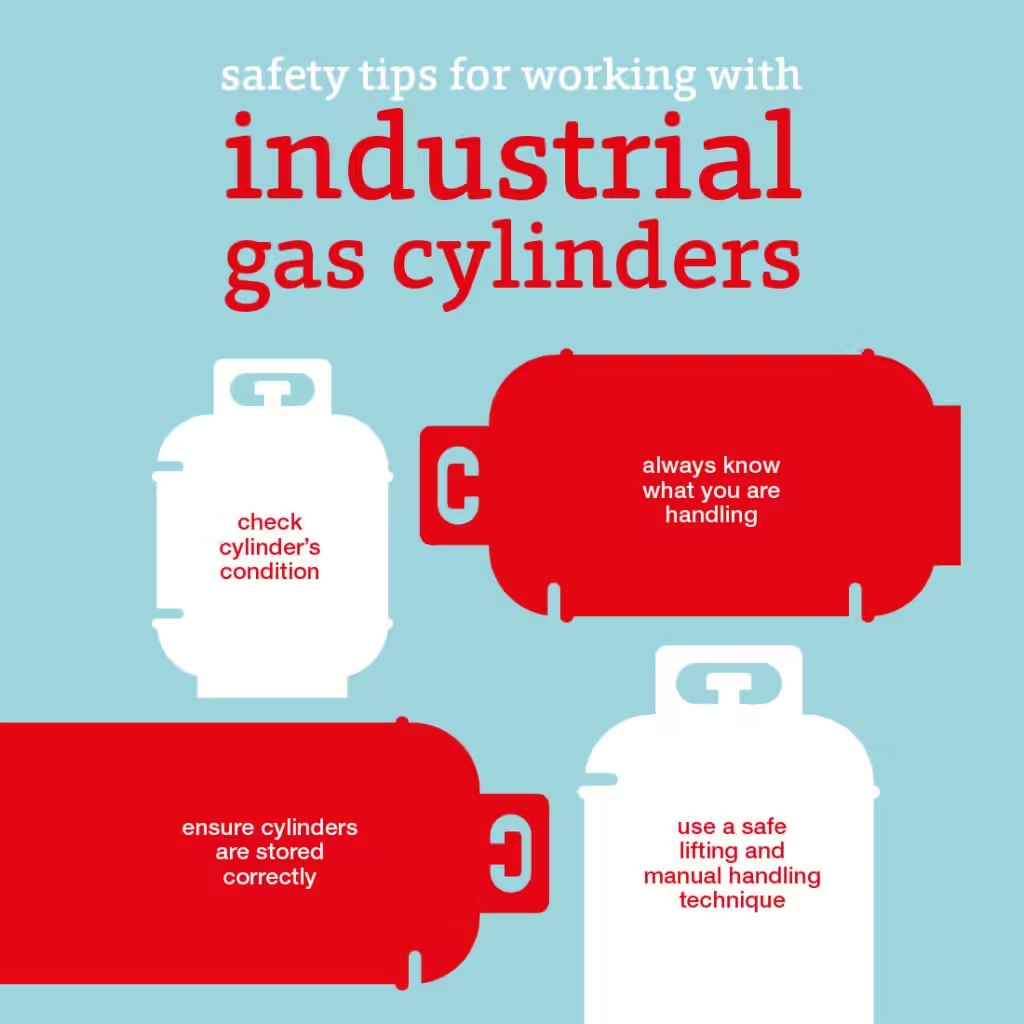
Compressed gas cylinders are used across various industries, from restaurants and medical facilities to construction, warehousing and workshops. While different gases have unique properties, they present similar hazards regarding identification, handling and storage. The risks include both the physical size of the cylinder and the volatile nature of the compressed gas inside. This is why gas cylinder safety is paramount; without proper precautions, a single industrial cylinder can potentially cause a range of serious incidents.
Following recognised industry practices when handling, storing and transporting gas cylinders significantly reduces the risk of injury or fatal accidents. Below are essential safety tips to follow when working with gas cylinders:
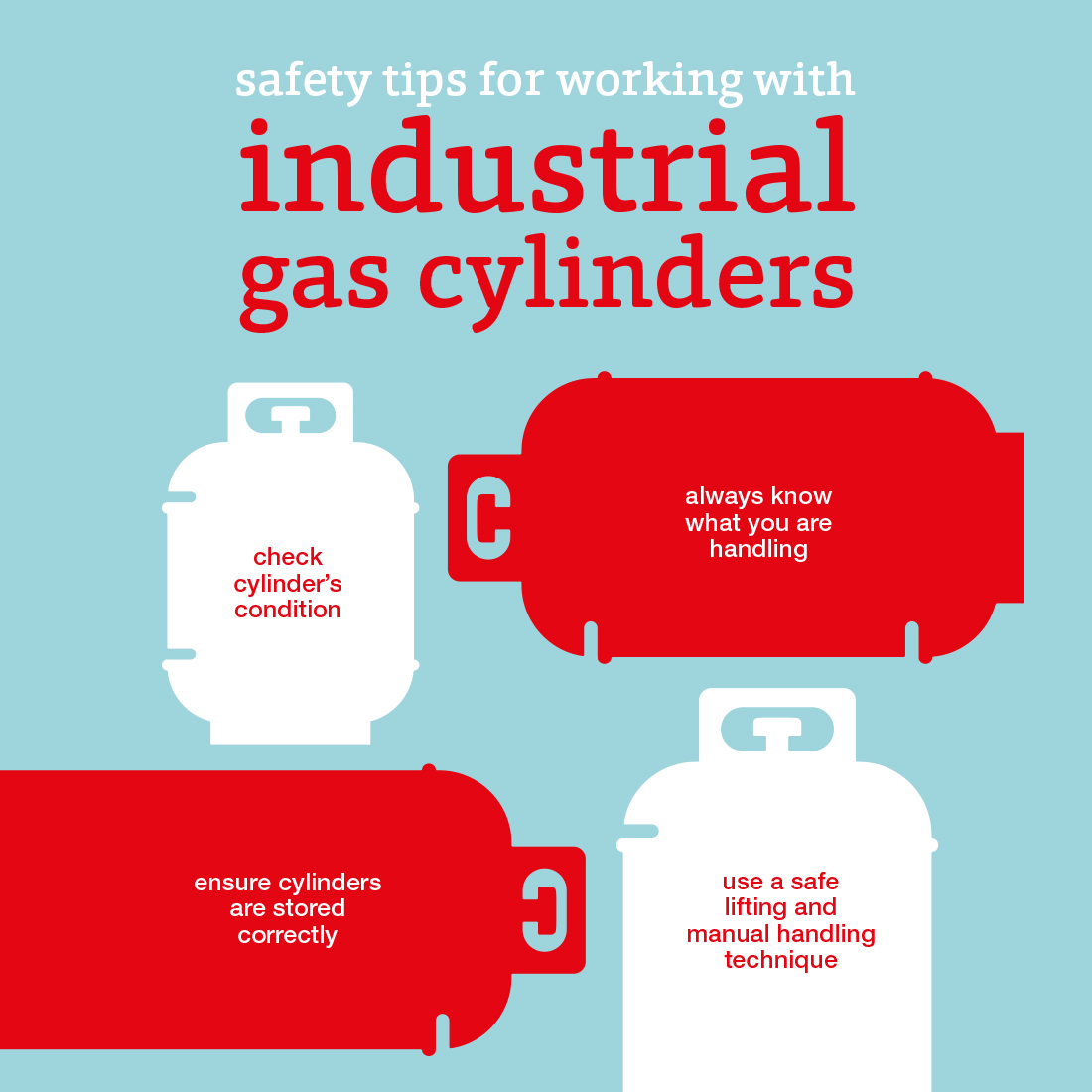
Always Know What You Are Handling
- Always identify the contents of a gas cylinder by checking the label; never rely on the cylinder’s colour, as this can vary between suppliers.
- If a label is missing, damaged or unclear, do not use the cylinder under any circumstances.
- Each gas has unique properties and hazards, and it is vital to consult the relevant Safety Data Sheets (SDS) before handling or transporting any gas cylinder. Understanding the risks can prevent accidents and help determine the correct handling and storage methods.
Check That Your Cylinders Are in Safe Condition
- Before use, always inspect cylinders for signs of damage, including dents, heat exposure, corrosion or discolouration.
- If any of these issues are present, treat the cylinder as potentially dangerous and report it immediately to your supplier or safety manager.
- Damaged cylinders can fail without warning and must be removed from service as soon as they are identified.
Store Cylinders Securely and Correctly
- Gas cylinders must always be stored upright in a well-ventilated, dry and secure location. They should be kept away from heat sources, ignition points and incompatible materials such as flammable substances.
- Segregate gases by type (e.g. flammables, oxidisers and inert gases) and ensure full and empty cylinders are stored separately. Good stock rotation is key; use older cylinders first to prevent long-term degradation of container integrity.
- Appropriate securing measures such as racks, chains or cages should always be used to prevent cylinders from tipping, falling or being knocked over.
Apply Safe Transport Practices Every Time
- Whenever gas cylinders are moved, they must be properly secured to prevent rolling, tipping or impact damage. Use suitable straps, trolleys and chocks to keep them stable.
- Protect cylinder valves at all times, as a broken valve can turn a cylinder into a high-speed projectile.
- Always move cylinders upright when transporting LPG (propane) and other liquefied gases. If acetylene cylinders must be transported horizontally, they should be allowed to stand upright for at least 30 minutes before use to allow the contents to settle safely.
- Proper cylinder transport is not only best practice; it’s critical to meeting workplace health and safety obligations.
Follow Safe Lifting and Manual Handling Techniques
- Handling gas cylinders requires care to avoid injuries and accidents.
- When lifting a cylinder manually, grasp the neck or collar firmly with both hands, keeping your back straight and using your legs to lift. Never attempt to lift a cylinder by the valve or hand-wheel.
- If a cylinder begins to fall, never try to catch it. Step back and let it fall away. Attempting to stop a falling cylinder can cause serious personal injury or damage to the valve system, creating a much larger hazard.
Case Study: Praxair Cylinder Fire (2005)
Though an older example, this case remains one of the most striking demonstrations of how failing to follow gas cylinder safety protocols can lead to catastrophic consequences. In June 2005, a Praxair gas-distribution facility in St Louis, MO, caught fire and quickly escalated into a massive cylinder explosion. The explosion caused a domino effect that sent gas cylinders rocketing through the air, damaging nearby homes and vehicles. An investigation uncovered several serious failures in gas cylinder safety:
- Exposure to Heat: Highly flammable cylinders—including propylene—were stored outdoors in direct sunlight. As the propylene cylinders vented due to the heat, they heated the surrounding cylinders, causing a chain of explosions.
- Lack of Fire Protection: There were no fixed water-spray or deluge systems to cool the cylinders. Best practice recommends that storage areas have sprinklers or water nozzles in case of fire.
- No Early Detection or Barriers: The facility lacked gas detectors to warn of leaking or venting gas and firewalls to contain the cylinders. These omissions significantly increased the hazard.
This incident is a stark reminder that even basic lapses (such as poor spacing, no fire protection and a lack of leak detection) can result in devastating consequences. It underscores the critical importance of correct storage protocols in preventing similar disasters.
Looking to Improve Your Gas Cylinder Storage?
Choosing the right storage solution is essential for maintaining gas cylinder safety on-site. Explore our range of purpose-built gas storage cages:
- Gorilla Gas Cage – Heavy-duty, secure storage for multiple cylinders
- TuffCage – Foldable, versatile gas cage designed for high mobility
- DrumCage – Dual-purpose cage suitable for gas cylinders and drums
Frequently Asked Questions
What is the correct way to store industrial gas cylinders?
Gas cylinders should always be stored upright in a secure, well-ventilated area away from heat sources and incompatible materials. Racks, chains, or cages should prevent them from tipping or falling. Gases should also be segregated by type, and full and empty cylinders should be kept separate.
What are the most common hazards of gas cylinders?
Common hazards include fire, explosion, leaks and physical injuries from manual handling. Improper storage or damage to the cylinder or valve can also cause a cylinder to become a high-speed projectile.
Can gas cylinders be stored outside?
Yes, but outdoor storage must follow strict safety protocols. Cylinders should be shaded from direct sunlight, secured properly and kept away from ignition sources. Weather protection and temperature regulation are critical, especially for flammable gases.
What’s the best way to transport a gas cylinder safely?
Always move cylinders upright using suitable trolleys or restraints. Protect the valve at all times and never drag or roll a cylinder. Gases like acetylene, cylinders transported horizontally should stand upright for at least 30 minutes before use.